If you’ve searched “dethatching Calgary” and ended up on a page that sells power raking — or called a company asking for one and got quoted for the other — you’re not alone. It’s one of the most common questions we get every spring.
The honest answer? In Calgary, power raking and dethatching are the same thing. Same result, same goal, and for our grass types, the same equipment gets the job done. Let’s break down why.
What Is Thatch and Why Does It Matter?
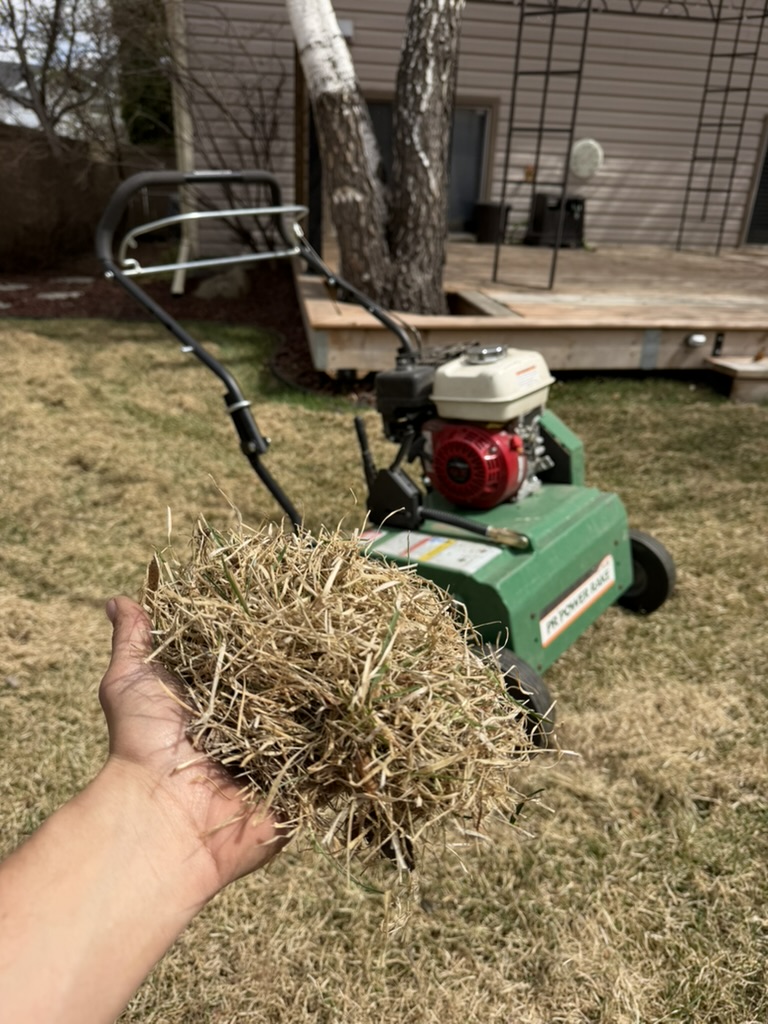
Thatch is the layer of dead grass stems, roots, and organic debris that sits between the soil surface and your living grass blades. A thin layer under half an inch is actually healthy — it helps insulate roots and retain moisture.
When it gets thicker than that, it starts working against you. Water, fertilizer, and air can’t reach the root zone, and your lawn shows it — patchy growth, spongy feel underfoot, slow green-up after winter.
The Technical Difference (And Why It Doesn’t Apply Here)
Technically, the two terms describe different tools:
Dethatching uses vertical spinning blades that slice through thatch and lift it to the surface. It’s generally considered a gentler process — better suited for lawns with moderate buildup.
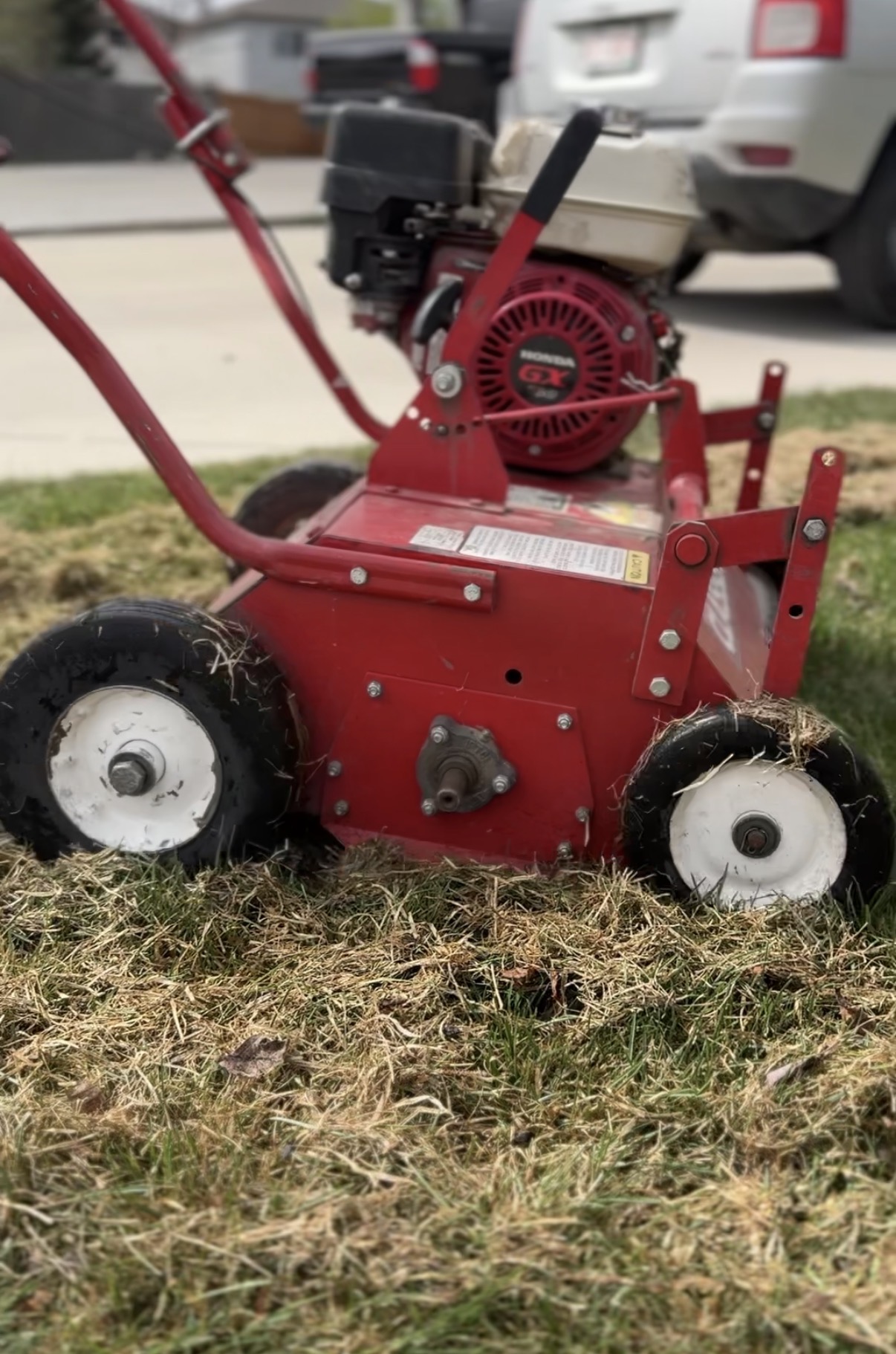
Power raking uses rotating flails or tines that aggressively pull thatch up and out of the turf. It’s more heavy-duty.
In warmer parts of North America — southern Ontario, British Columbia, or the southern U.S. — this distinction actually matters. Grass types like Bermuda, Zoysia, and St. Augustine grow aggressively year-round and can build up dense, compressed thatch layers over an inch thick. Choosing the right tool and intensity for those lawns makes a real difference.
But that’s not what we’re dealing with in Calgary.
Why Calgary Lawns Are Different
Calgary lawns are almost exclusively made up of cool-season grasses — primarily Kentucky bluegrass, creeping red fescue, and perennial ryegrass. These grasses grow relatively slowly, and because of our short growing season, they simply don’t produce the heavy thatch accumulation you’d see in warmer climates.
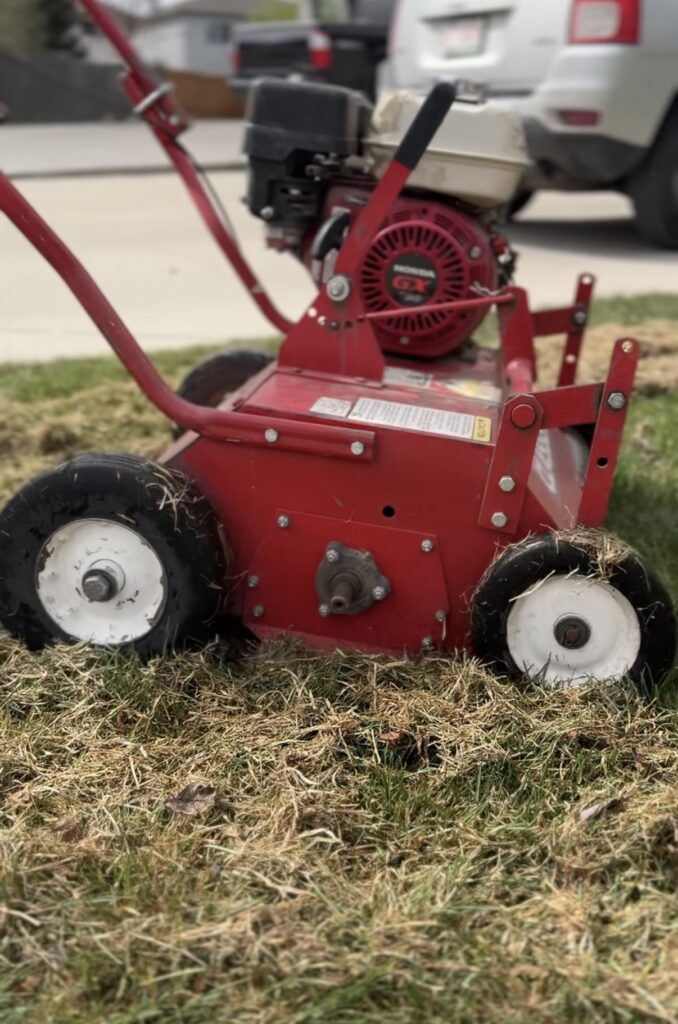
What we’re mostly dealing with after a long Calgary winter is:
- Matted dead grass blades
- Snow mold debris
- Loose organic material that built up from the previous season
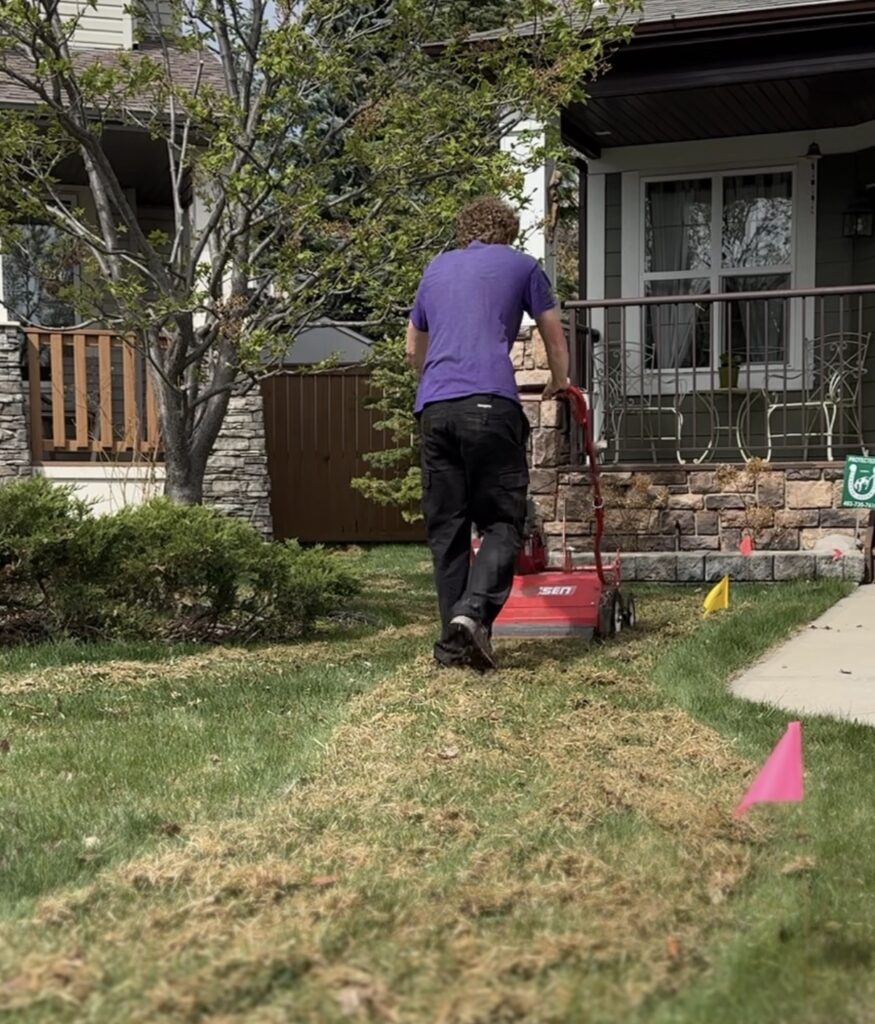
For that, a power rake handles it perfectly. The distinction between “power raking” and “dethatching” just isn’t meaningful here — which is exactly why Calgary landscaping companies use the terms interchangeably. When a Calgary homeowner asks for either one, they need the same service. The City of Calgary’s lawn care guidelines also recommend removing thatch buildup as part of seasonal lawn preparation — regardless of what you call the process.
When Should You Power Rake in Calgary?
Timing matters more than the terminology. In Calgary, the ideal window is late April to mid-May — once snow is fully gone and the ground has dried out, but before grass has fully come out of dormancy.
Power raking too early on wet or frozen ground can damage roots. Too late into spring and you’re tearing up actively growing grass, which slows recovery.
Environment Canada confirms Calgary’s average last frost typically falls in early May, which helps frame the ideal timing window for early-season turf work: weather.gc.ca
For most Calgary properties, booking in April gives you the best results.
Does Your Lawn Need It Every Year?
Not necessarily. If your lawn is well-maintained and thatch is thin, every two to three years may be enough.
Signs it’s overdue:
- Lawn feels spongy underfoot
- Grass looks matted or grey after snow melts
- Water pools on the surface instead of soaking in
- Fertilizer doesn’t seem to be working
- Lawn is slow to green up compared to neighbours
A good test: part the grass blades and look at the base. If you can’t easily see soil, thatch is likely building up.
What to Pair With Power Raking
Power raking on its own is effective, but pairing it with other early-season services gives your lawn a strong foundation heading into summer.
Lawn Aeration — loosens compacted soil and allows water and nutrients to reach the root zone. Works best done right after power raking while the surface is open.
Overseeding — fills in thin or bare patches with fresh seed. The disturbed surface from power raking creates ideal seed-to-soil contact.
Lawn Fertilization — gives the lawn the nutrients it needs to take full advantage of the open, aerated surface you’ve just created.
Many homeowners combine all three into a single spring visit. It’s the most effective way to set your lawn up for a thick, green summer.
How Power Raking Fits Into Your Spring Cleanup
Power raking is typically one of the first services done during a spring cleanup. Once thatch is removed, the lawn is ready for aeration, seeding, and fertilizer — all of which work better on a clean surface.
Learn more about what a full spring cleanup includes: Spring Clean Up Services Calgary
And if you’re not sure whether your lawn needs power raking, aeration, or both — we’re happy to take a look and give you a straight answer. No upselling, no guessing.
The Bottom Line
Power raking and dethatching are two names for the same service in a Calgary context. The grass types we grow here don’t develop the heavy thatch that makes the distinction matter elsewhere in North America.
What does matter is timing, proper equipment, and pairing it with the right follow-up services to get the most out of your lawn this season.
Get a free quote from Algo Landscaping and we’ll take care of the rest.
Algo Landscaping is a Calgary-based lawn care and property maintenance company serving residential and commercial clients across the city. Questions? Call us at (587) 889-5384